Early Life and Formative Influences
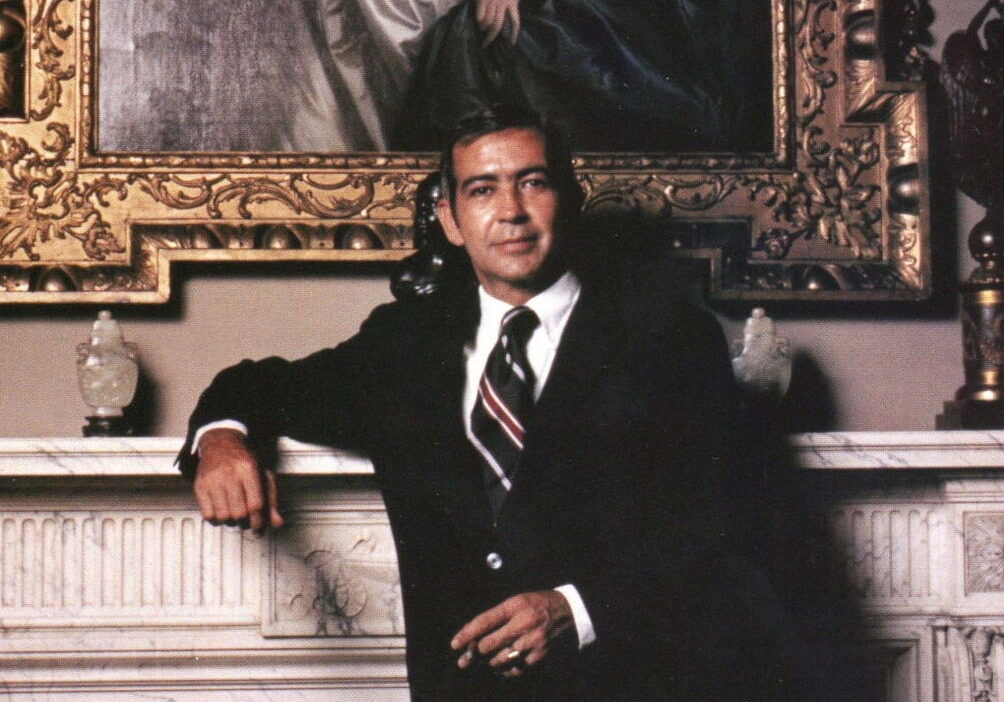
James Arthur Williams, widely known as Jim Williams, was born on December 11, 1930, in Gordon, Georgia. He entered life in a rural milieu shaped by domestic labor, regional custom, and architectural memory. His father, Arthur Costlar Williams, was born in 1904. His mother, Blanche Brooks Williams, was born in 1906. Those dates place his upbringing within a generation that still lived close to older Southern forms of construction and decorum.
Williams spent his childhood years in Turner County between 1930 and 1948. That period helped refine his eye for proportion, patina, and historical fidelity. He absorbed local traditions before moving to Savannah at age 18 in 1948. The city offered him a richer stage for work in real estate and interior design. It also gave him direct contact with historic structures that would later define his reputation.
His early career benefited from a disciplined fascination with eighteenth and nineteenth century architecture. By 1965, he had built enough expertise to move confidently within Savannah’s historic real estate market. He became known for period-appropriate materials and exacting restoration choices. Plasterwork, mahogany inlay, and wrought iron detailing became part of his signature approach. That vocabulary of craft separated him from ordinary dealers and decorators.
| Family Member | Relationship | Birth Date | Death Date |
|---|---|---|---|
| Arthur Costlar Williams | Father | March 2, 1904 | July 12, 1972 |
| Blanche Brooks Williams | Mother | August 15, 1906 | May 3, 1988 |
| Dorothy Williams Kingery | Sister | May 5, 1933 | April 10, 2023 |
| Dorothy Susan Kingery | Niece and Successor | June 20, 1962 | Living |
Mercer House and the Discipline of Restoration
In January 1969, Williams purchased Mercer House, a 14 room mansion on Monterey Square built in 1868. The property demanded enormous labor and investment. It required roughly 2,300 hours of work and more than $250,000 in materials. In 2025 terms, that sum approximates $1.9 million. He did not merely own the house. He treated it as a long restoration campaign.
The work continued from 1969 through 1977. During those years, Williams supervised structural repairs, interior recovery, and landscape renewal. The sequence mattered. He addressed the building’s bones before turning to finish work. That restraint preserved the house’s architectural integrity. It also reflected a preservation ethic that valued authenticity over spectacle.
| Restoration Phase | Years | Key Activities | Estimated Cost |
|---|---|---|---|
| Structural Repairs | 1969 to 1972 | Roof, foundation, gutter system | $75,000 |
| Interior Restoration | 1972 to 1975 | Plasterwork, flooring, windows | $120,000 |
| Landscape Rejuvenation | 1975 to 1977 | Trees, garden beds, piazza columns | $55,000 |
Structural repairs began with roof replacement in 1970. Foundation stabilization followed in 1972. Those measures protected the mansion from deeper decay. Interior work then restored 12 rooms and replaced flooring in 4 rooms. He also installed 28 leaded glass windows. The result was not a generic makeover. It was a historically inflected reconstruction.
The grounds received similar attention. Six magnolia trees were replanted. The original piazza columns were restored. Such details mattered because Mercer House functioned as a total composition. By 1977, it was regarded as one of the finest Italianate residences in the American South. That status came from rigor, not ornament alone.
Savannah Preservation and Public Influence
Williams’s restoration of Mercer House had consequences beyond one address. It helped sharpen Savannah’s broader preservation movement during the late 1970s and early 1980s. His work demonstrated that serious restoration could elevate civic identity and property value simultaneously. In practice, it encouraged other owners to reimagine aging structures as assets rather than burdens.
The effects were measurable. Between 1979 and 1983, restored private homes increased by 35 percent, rising from 120 to 162. Tourism also expanded during the following decade. Annual visitor counts climbed from 332,000 in 1980 to 485,000 in 1990. Interest in Mercer House contributed to that surge. The city also enacted at least 17 new preservation ordinances after 1989.
Williams did not act alone in this environment. His network included architects, artisans, historians, and civic figures. More than 50 professionals were tied to his work over time. That network included 20 architectural salvage firms, 15 master craftsmen, and 17 civic leaders and city officials. In 1985, he co founded the Savannah Preservation Society. He served as its first president until 1988.
The 1981 Shooting and Legal Turmoil
Williams’s public life changed abruptly on May 2, 1981. On that date, he and his 21 year old assistant, Danny Lewis Hansford, were involved in a fatal argument at Mercer House. Hansford was born on May 15, 1960. Williams claimed self defense, stating that Hansford threatened him with a gun. The event drew intense scrutiny and launched years of legal conflict.
Four trials followed across eight years. Each conviction was later overturned. The litigation became a study in procedural instability, evidentiary conflict, and jury controversy. The final acquittal arrived on April 13, 1989. That result came 2,900 days after the shooting. Williams had spent 1,142 days on bond and house arrest during the process.
| Trial Number | Date Begun | Verdict | Outcome |
|---|---|---|---|
| I | July 13, 1982 | Guilty | Life sentence, overturned |
| II | March 9, 1984 | Guilty | 20 year sentence, overturned |
| III | November 5, 1986 | Guilty | 10 year sentence, overturned |
| IV | February 15, 1989 | Not Guilty | Acquitted |
The legal battles made Williams a contested figure. Some saw him as a preservationist of rare tenacity. Others focused on the violence and scandal surrounding the case. Both views persisted because the facts carried moral and cultural weight. Mercer House became inseparable from that tension. The mansion was no longer only an architectural landmark. It was also a site of public memory.
Mercer House as Museum
After Williams’s death on January 14, 1990, Mercer House continued to evolve as a place of interest. Dorothy Susan Kingery, his niece, took responsibility for the property in 2023. Under her management, the house functions as a home museum. That role has made the estate accessible to visitors who seek architectural detail and historical context.
The museum’s 2024 figures show sustained public demand. Annual visitors reached 38,400. Guided tours totaled 4,560 for the year. The staff numbered 12 people. The house contains 14 room exhibits. It also hosted 22 special events. Those numbers suggest a steady institutional rhythm rather than a purely ceremonial site.
| Museum Metric | Value |
|---|---|
| Annual Visitors | 38,400 |
| Guided Tours per Year | 4,560 |
| Staff Members | 12 |
| Room Exhibits | 14 |
| Special Events Hosted | 22 |
The museum offers five tour options. A 30 minute architectural tour sits at one end of the range. A 90 minute complete historical overview occupies the other. Ticket prices range from $25 to $75. Group rates are available for parties of 10 or more. Such programming reflects a layered audience. Some visitors want the house as an object. Others want the story surrounding it.
Reputation, Reach, and Cultural Memory
Williams’s influence extended through both formal organizations and informal professional ties. He worked with more than 50 architects, artisans, and historians during his lifetime. That range gave him unusual leverage within Savannah’s preservation culture. He was not merely a patron. He was a broker of taste, labor, and historical judgment.
His preservation society eventually grew into a substantial civic institution. By later years, it had more than 1,200 members and an annual budget above $600,000. Those numbers indicate how far his legacy traveled. A house restored with exactitude became a civic reference point. A private passion turned into public policy and organized stewardship.
The cultural memory of Williams is still shaped by contradiction. He was refined, exacting, and visibly devoted to architectural preservation. He was also entangled in one of Savannah’s most notorious criminal cases. That duality gives his biography unusual texture. Mercer House remains the clearest material expression of that complexity. It stands as both a restored artifact and a record of turbulent human history.
Key Takeaways
Jim Williams was born in 1930 and built his career in Savannah after moving there in 1948. His early familiarity with Southern architectural traditions shaped his later preservation work. Mercer House, purchased in 1969, became his defining project and required eight years of extensive restoration. The house now serves as a museum with 38,400 annual visitors and 14 room exhibits. Williams’s 1981 shooting case led to four trials and an acquittal in 1989. His work helped energize Savannah’s preservation movement and left a durable civic imprint.